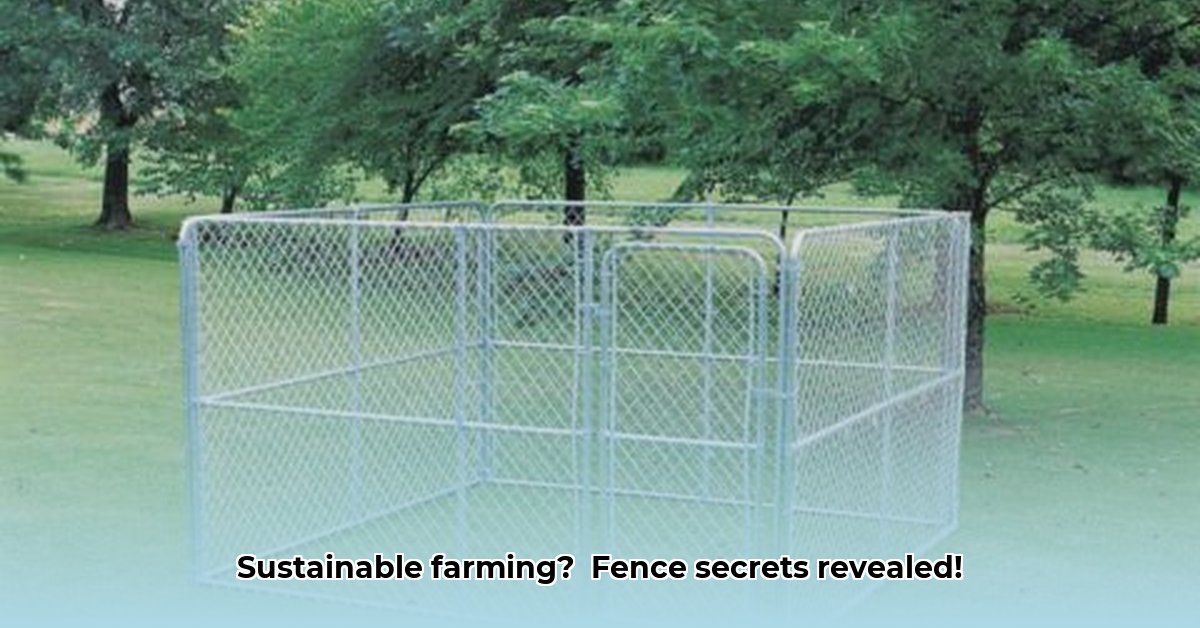
Building a strong and lasting fence is crucial for any farm, protecting livestock, crops, and property. Choosing the right fencing material also impacts environmental sustainability. This guide focuses on Tractor Supply's chain link fence panels, offering a practical, step-by-step approach to installation and maintenance, while also exploring sustainability considerations and viable alternatives. For more options, check out Tractor Supply's fence panels.
Choosing the Right Chain Link Fence
Selecting the appropriate chain link fence involves considering several factors. What type of livestock are you enclosing? How much security is needed? What's your budget? Tractor Supply offers various options in height, gauge (wire thickness), and mesh size. A thicker gauge (e.g., 9 gauge) offers superior durability but at a higher cost. Smaller mesh sizes are better for containing smaller animals but may require more frequent maintenance. Post types (e.g., steel, wood) and spacing influence both the fence's longevity and its initial cost. Carefully review Tractor Supply's product specifications and compare them to offerings from other suppliers to make an informed decision. Remember, a well-chosen fence built correctly can save you money and effort in the long run. Isn't that a smart investment?
Step-by-Step Installation Guide
Installing a chain link fence, while seeming complex, becomes manageable with a well-defined plan and the right tools.
Step 1: Planning & Preparation: Begin by accurately measuring the perimeter and marking post locations. Obtain any necessary permits. Gather your tools: a post-hole digger (a power auger significantly speeds this process), a level, measuring tape, wire tensioners, and fasteners specified in Tractor Supply's installation instructions. Thorough preparation ensures a smoother and more efficient installation.
Step 2: Setting the Posts: Dig holes to the appropriate depth and width, ensuring they are straight and plumb (perfectly vertical). Use concrete to secure the posts firmly in the ground, preventing shifting and maintaining fence alignment. Double-check post verticality using a level.
Step 3: Installing End & Line Posts: Securely install the end posts, ensuring they are perfectly plumb. These posts set the overall fence alignment. Install line posts at the recommended spacing (check Tractor Supply's instructions), ensuring they are also plumb.
Step 4: Stretching & Securing Line Wires: Use wire tensioners to stretch and secure the line wires between the posts. These wires provide crucial support for the panels. Maintain consistent tension along the entire length.
Step 5: Attaching the Panels: Attach the Tractor Supply chain link fence panels to the line wires using the provided clips and fasteners. Ensure panels are securely fastened and taut to prevent sagging.
Step 6: Final Inspection: Thoroughly inspect the entire fence for any misaligned panels, loose connections, or areas needing further tightening. Address any issues immediately. A well-installed fence will serve you for years to come.
Safety First: Always wear safety glasses and gloves when using tools or handling sharp materials. If working in uneven terrain, consider extra bracing for your posts.
Maintenance and Longevity
Regular inspections are vital to extend your fence's lifespan. Regularly check for damaged wires, loose connections, or signs of rust. Minor repairs performed promptly prevent larger, more costly issues later. Clear away debris that might accumulate. Applying a protective coating can significantly increase the fence's resistance to rust and corrosion. Maintaining your fence is an investment in its longevity and sustainability. Did you know that regular maintenance increases a fence's lifespan by up to 30%?
Sustainability Considerations
While chain link fencing offers durability, the steel production process carries environmental implications. Although comprehensive life cycle assessments (LCAs) for chain link fencing are not readily available from Tractor Supply, you can minimize environmental impact by choosing panels made with recycled steel whenever possible. Consider the transportation distance of your materials—locally sourced materials reduce your carbon footprint.
Comparing Fencing Options
Several sustainable alternatives exist. Bamboo, a renewable resource, offers an attractive and cost-effective option but might require more frequent maintenance and may not suit all climates. Recycled plastic fences present a durable, low-maintenance solution but may have a higher initial cost. Each material has trade-offs concerning cost, durability, and environmental impact.
| Fencing Material | Pros | Cons | Sustainability Considerations |
|---|---|---|---|
| Chain Link (Tractor Supply) | Durable, readily available, relatively inexpensive | Steel production impact, susceptible to corrosion | Choose recycled steel, diligent maintenance is key |
| Bamboo | Renewable resource, aesthetically pleasing, potentially lower cost | Requires regular maintenance, limited lifespan in some climates | Prioritize locally sourced, sustainably harvested bamboo |
| Recycled Plastic | Durable, low-maintenance | Higher initial cost, potential for long-term degradation | Verify sourcing and recycling capabilities of the material |
Resources and Further Reading
For additional information, consult Tractor Supply's website for product specifications and installation guides. Explore agricultural extension websites and academic research on sustainable fencing practices for a deeper understanding of environmental impact and best practices. Choose the best option for your farm's unique needs.
Tractor Supply Chain Link Fence Panels
Content about tractor supply chain link fence panels (Auto-generated fallback due to API error).
Tractor Supply Chain Link Fence Panels
Content about tractor supply chain link fence panels (Auto-generated fallback due to API error).